

How to Solve Inventory Management Problems (Easy and Practical Guide)

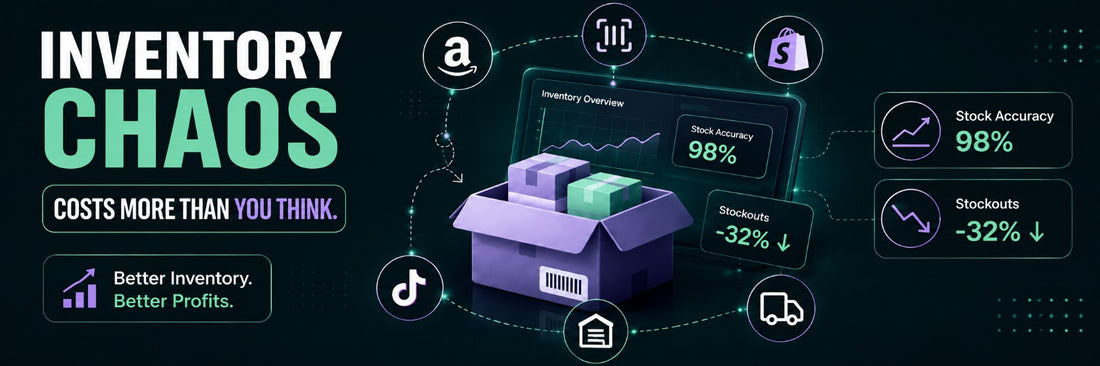
Inventory management is not just necessary but an important part of running a successful business. Even if you are a retail shop owner or an online store owner, or you have your own manufacturing unit, what matters is how you manage your stocks because it directly leaves an impact on your profits, customer engagement, and overall business growth.
Although, many businesses face very common inventory management problems such as overstocking, stockouts, poor tracking systems, and inaccurate records. It looks like a very small issue at first, but as the time passes, it could lead to some serious business losses.
We have good news for you! These problems are stressful, but not impossible to fix. Use the right approach and some simple techniques, and then you’ll be able to achieve better inventory optimization and improve your overall system.
By the end of this blog, you’ll be able to look at your inventory management challenges in a practical manner with the right techniques to solve them easily.
What is Inventory Management?
Now the question comes, what exactly does inventory management mean? It’s the process of tracking, storing, and controlling your products and services. It makes you track the total products you have, where they are stored, and when to reorder the required products.
What’s the main goal?
To maintain the right balance. Never run out of products, and avoid hoarding too much unused stock. When you have a good inventory management system, it helps in reducing costs, improves efficiency, and raises customer satisfaction.
Common Inventory Management Problems
It’s necessary to understand the causes before solving any issue. Here’s some of the most common inventory management problems that usually businesses face:
1. Lack of Inventory Visibility
Businesses often fail to have a clear picture of their stock levels. Lack of information on the availability of inventory and where it is actually located. It creates confusion and delays in order fulfilment during sales. For instance, when a customer places an order and the product appears out of stock. It leads to poor experience and the brand loses customer trust.
2. Inaccurate Inventory Data
Another biggest stock control issue is incorrect data. If you do not update your inventory records regularly, it’ll lead to wrong business decisions. For example, you reorder items that are already in stock and forget to restock the products that are running out. These small errors in data could create some major operational problems.
3. Overstocking and Understocking
One of the major challenges in businesses is balancing the inventory:
- Overstocking makes storage costs high and blocks the flow of cash
- Understocking leads to loss in sales and unhappy customers
In either situation, it impacts your business, and is considered one of the most crucial inventory management challenges.
4. Manual Inventory Management
What raises the chances of human error while inventory management is the manualing method. When businesses grow, these are some of the methods that become slow and inefficient. When you manage a large volume of data manually, it often leads to mistakes.
5. Poor Demand Forecasting
You need to predict customer demand in order to manage inventory, otherwise it sometimes becomes too difficult to manage excess demand. Without proper forecasting, you will end up either with an excess stock or frequent shortages. It hinders smooth operations and affects inventory optimization.
6. Poor Warehouse Organization
In an unorganized warehouse, it becomes difficult to find products faster. This leads to delays and increases the labor cost, sometimes also lost inventory. You need to have a good structured layout of your inventory in order to save it from labeling losses and sales in the long run.
Also read: Best Checkout Apps for Shopify
How to Solve Inventory Management Problems
Now that we have understood the inventory management problems clearly, let’s look at the solutions that actually works:
1. Inventory Management Software
One of the best ways of solving inventory management problems is modern software. These tools provide real-time tracking of your stock and you always know how much inventory you have left with. It reduces human errors, and improves accuracy. These tools are very helpful specially for growing businesses so that they could have control over their operations and keep a check on it over time.
2. Improve Inventory Tracking
A good inventory management needs a proper tracking system. Tools like barcodes or RFID helps in monitoring your every product movements. It also improves visibility and makes sure that your data comes out accurate. Tracking also decreases the chances of theft, loss, and misplacement.
3. Focus on Important Products (ABC Analysis)
All products don't need the same attention. It can be prioritised based on three categories:
- High-value items
- Medium-value items
- Low-value items
Focus on high-value products, and automatically you’ll notice an improvement in your overall decision-making method and stocks.
4. Use Demand Forecasting
Demand forecasting predicts your future sales on the basis of past data. It analyses trends, seasonal patterns, behavior of the customer, and makes best decisions on how much stock to keep. It reduces both overstocking & understocking.
5. Maintain Safety Stock
Safety stock is the extra inventory that is kept as a backup. It reduces delays in any unexpected demand and supply in your business. Many times, just small disruptions could cause stockouts, and that’s where safety stock helps. It keeps a reasonable buffer and makes operations smoother.
Also read: How to Improve Conversion Rate for an E-commerce Website
6. Adopt Just-in-Time (JIT) Method
In the Just-in-Time method, we order inventory only when it is needed. It decreases the storage costs and reduces waste. It needs strong coordination with suppliers and an accurate forecasting of customer demand. It increases efficiency, when used correctly.
7. Conduct Regular Inventory Audits
It’s important to keep regular checks to match your records with the actual stock. This can be done by several methods such as physical counting or cycle counting to check inventory. It helps in identifying errors beforehand and maintains an accurate record. Audits are necessary in solving long-term inventory management problems.
8. Organize Your Warehouse
A well-organized warehouse saves your time and effort. Products must be clearly labeled in a logical order and stored accordingly. Products that are fast-moving must be easily accessible in comparison to slow-moving items. This improves overall workflow and reduces any delays.
Conclusion
Inventory management is not as complicated as you think, most of the problem can be solved just by improving the visibility and using the right tools by using simple processes. First of all, understand your current system, identify the gaps, and implement the solutions step by step.
Over some time, you’ll see a drastic improvement in the efficiency and profitability of your business. And always remember, good inventory management is not about stock, it’s about making smart business decisions.


