

How to Improve Conversion Rate for an E-commerce Website
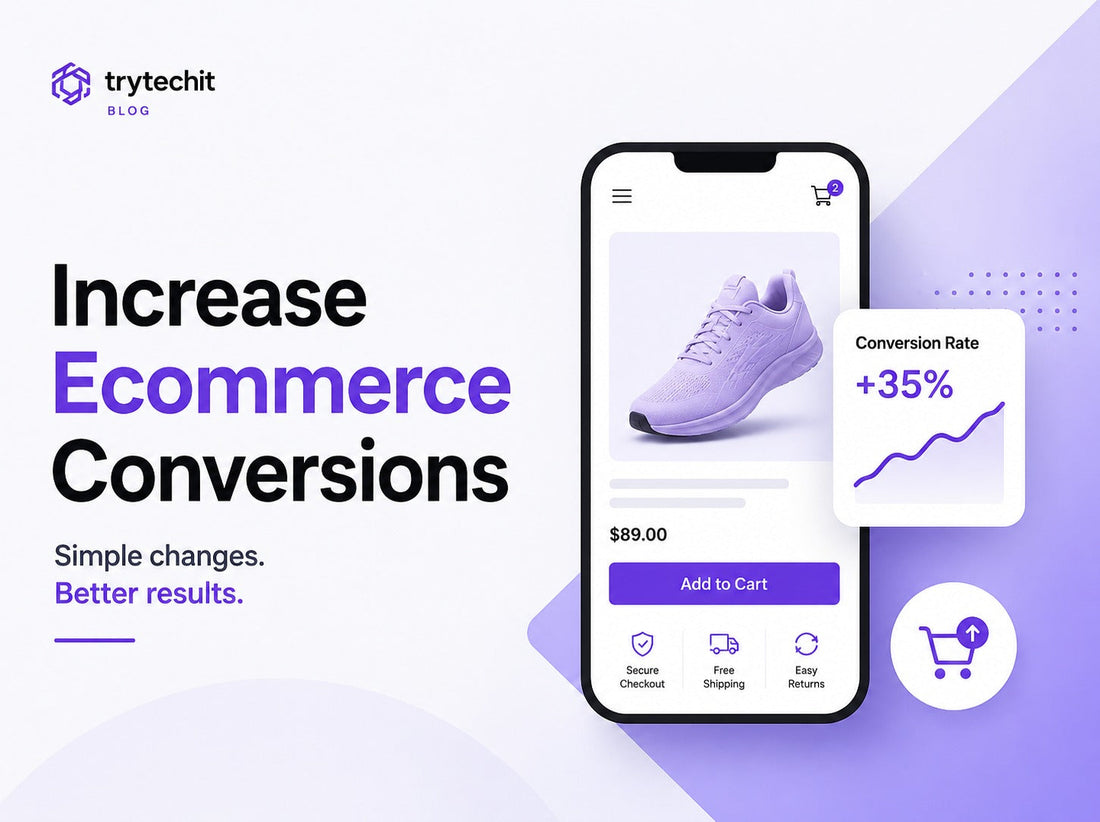
It’s exciting to see people visiting your e-commerce website. Traffic numbers are increasing, ad performance is improving, and clicks are rising, but when you examine the sales, something feels off. People are visiting but not buying your product or services.
This is where conversion rate becomes crucial.
Conversion rate is nothing but simply the percentage of visitors taking action after visiting your website. When visitors become buyers. Improving this is a part of Conversion Rate Optimisation, and it doesn’t need any complicated tools or a massive budget; what it requires is a strong understanding of user behavior and user experience.
Let’s look at all of them one by one.
Why Conversion Rate Matters
What exactly conversion rate means:
Conversion rate = (Orders + Visitors) * 100
Imagine two stores.
Both of them get 100 visitors a month.
Store A converts 1% of visitors.
Store B converts 3%.
Store B earns three times more money with the same traffic, and that’s the power of conversion rate.
While you’re chasing more traffic, improving the rate of conversion will help you get more visitors than you already have. This is smarter, cheaper, and sustainable for the long run. Usually, brands work with an experienced e-commerce consultant to identify where they are losing potential buyers, and they can improve these points.
Identify Where Customers Drop Off
Before moving ahead, take a look and observe:
- Are visitors leaving your homepage too early?
- Are they visiting the products but not adding them to the cart?
- Are they adding products to the cart but leaving at checkout?
Each problem needs to be addressed differently.
For example:
- People leave your website early because it feels too confusing or is loading slowly.
- They are abandoning carts because checkout feels too risky or expensive to them.
- They are browsing but not buying; it’s possible they still have doubts about your product.
There could be a lot more reasons, and you cannot fix everything all at once, so start with the bigger problem first.
Also read: Web vs. Mobile App for E-commerce: Which Is Better?
Improve Website Experience
People want to see something work for them without figuring out something huge.
1. Keep Navigation Simple
A good e-commerce website should be simple and clean. Everything should be in front of the user's eyes without any complex searching. Visitors should not have to think too much about how to use it. When people start to get all of it sorted, they find your products easily and will be more confident in buying them.
2. Speed Is Not Optional
Another crucial aspect is your website speed. If your website is slow, it’ll eventually lose sales. According to studies, even a few seconds' delay can affect the conversion rate at large. People want instant responses online, and a fast and smooth website establishes a sense of professionalism and reliability towards your brand. To make your website work more smoothly, compress images, reduce any unnecessary clutter, and keep things light. Often, working with a reliable web development agency helps your site get optimized for the best speed and performance.
3. Mobile Experience Matters a Lot
Mobile experience plays an equal part. A lot of e-commerce users majorly shop on their phones; while doing other things, they start scrolling and pause the minute they find something that catches their eyes. If the buttons on your website are lagging or if any of the pages look cluttered, they lose patience and instantly leave.
Optimize Product Pages
Your product page is where trust is built or broken.
Product pages are the places where users’ interests are turned into decisions. This is where they stop and start thinking if they should buy this product or not.
1. Show the Product Clearly
Use sharp and clear images with different angles and close-ups. Add video shots too, if possible. People want to see clearly the product they are buying. Clear and high-quality images help users imagine the product in real life and reduce uncertainties before buying.
2. Write Like a Human
Do not make the product descriptions too complicated; it’s an explanation, not a sales pitch. It must be clear and easy to understand what the product features are and what it is about. Explain the benefits and usage of your product more than the features. It will help people understand what the product does, how it helps, and why it’s worth buying.
3. Reviews Matter
The first thing people check after going through your product is reviews, because people trust other buyers more than brands. It acts as social proof and improves reliability for your brand and reduces the fear of first-time buyers. Quantity doesn’t matter; quality does. Even a few honest reviews make a big difference.
Reduce Checkout Friction
If we talk about where most of the sales are lost, it’s at checkout time. When customers wish to buy something, they add it to their shopping cart, but when it comes to checkout for all of it, something happens. Here are some major reasons:
Keep Checkout Short
Long forms scare people away. Ask only for what’s necessary.
When users are asked to fill multiple fields, it makes them cautious. The process becomes too long or complicated, and the momentum of the checkout process slows.
Don’t Force Account Creation
Not everyone wants to create an account immediately. Let users check out as guests. You can always ask them to create an account later.
Be Honest About Costs
Another thing to keep in mind is that when customers see unexpected shipping costs at the checkout point, they stop and start thinking, which breaks the trust instantly, and an extra fee makes them rethink about buying your product. Keeping transparency about the pricing on a prior basis reduces the last-minute drop-offs.
Checkout should feel calm, not stressful.
Build Trust Signals
Trust is the backbone of e-commerce, and it does not come from one thing alone. It builds slowly as users move through your website. Clear return and refund policies mentioned on your website ensure the safety of your users. Provide constant support to your users on the website and secure payment options. All of this boosts the confidence of your users and establishes faith in your brand.
When users feel they have support after their purchase, when something goes wrong, they are more likely to buy your product without second thoughts.
What users should easily find:
- Contact details.
- Return and refund policies.
- Delivery time.
- Secure payment.
When users trust you, they don’t overthink their purchase.
Use Small Tests Instead of Big Assumptions
You don’t need to redesign your entire website to improve conversions.
Improving conversion rate does not mean redesigning everything at once. Often, small adjustments bring meaningful results.
You can change the wording of a button, or just improve a headline, or simplify a page layout to make the experience smoother. These small changes could seem insignificant sometimes, but they reduce friction and guide users naturally toward buying.
Watching how users behave on your website can be more useful than assumptions. Where they pause, where they scroll, and where they leave can tell you a lot about what needs improvement.
- Start small:
- Change the button text.
- Try a different product image.
- Rewrite a headline.
- Simplify a page layout.
Test one thing at a time. Sometimes the smallest changes bring the biggest results.
Watch how users behave. Where do they scroll? Where do they stop? Where do they leave?
Use Urgency Carefully and Honestly
Urgency boosts conversions, but it should be real.
The messages of limited stocks or time-bound offers make people act faster. But doing it many times damages trust and gives a false idea of fake urgency to the users. If it always says, “ending soon," people will stop taking it seriously.
Honesty always wins in the long run.
Continuous Optimization
User behavior, trends, and expectations keep on changing, and improving conversion rate is not a one-time task. User expectations change over time, trends evolve, and new competitors appear in the market. The best e-commerce websites keep learning from all of it and improve little by little over time.
Even a little improvement, when repeated consistently, can ensure stable and strong long-term growth. What matters most is paying attention to your user behavior and learning through their actions.
The best e-commerce brands don’t run behind perfection. Instead, they focus on:
- Listening to users
- Removing friction
- Improving little things consistently
Even a 1% improvement, consistently repeated, can lead to massive growth.
Conclusion
Conversion rate is not about tricks or any pressure tactics; it’s something beyond. It’s about making people feel confident, comfortable, and understood.
It’s just like looking at your website from a third person’s perspective who is visiting it for the first time.
When your products feel trustworthy, and your checkout feels safe, buying becomes a natural decision.
Make your website easy and your products clear.
Checkout stress-free, and make trust visible.


